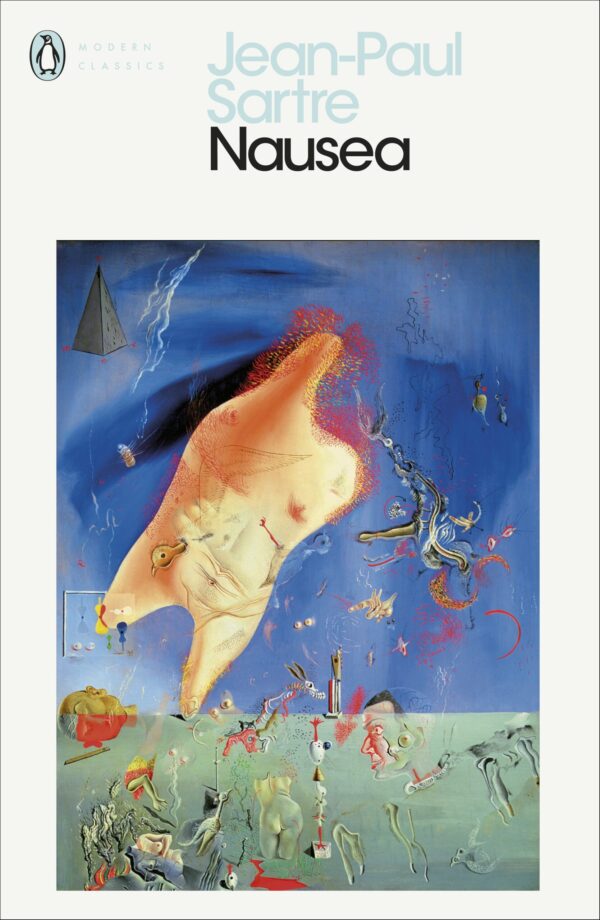
Nausea
| Jean-Paul Sartre |
Nausea by Jean-Paul Sartre (Penguin Modern Classics) — the novel that launched existentialism as a cultural movement. Antoine Roquentin’s diary records his overwhelming confrontation with the meaningless facticity of existence — the existentialist vocabulary at its most vivid and accessible. First published in 1938. Trans. Robert Baldick.
| Penguin Modern Classics | |
| რბილი ყდა | |
| ინგლისური |
46.00 ₾
მარაგში
| რაოდენობა | ფასი | ფასდაკლება |
|---|---|---|
| 3-9 | 39.10 ₾ | 15% |
| 10+ | 32.20 ₾ | 30% |
ანოტაცია
One Tuesday morning, Antoine Roquentin picks up a stone on a beach and feels, for the first time, the thing he will spend the rest of the novel trying to describe and understand. It is not disgust exactly, and not fear. It is a confrontation with the sheer, brute, meaningless factuality of existing things — the way they simply are, without necessity, without purpose, without any of the human meaning we project onto them. He calls it nausea.
Published in 1938, Nausea is the novel that launched existentialism as a cultural movement and introduced the vocabulary that would define a generation of European intellectuals. But it is also something simpler and more immediate: a portrait of a man having what we would now call an existential crisis, rendered with a novelistic precision and psychological accuracy that makes it feel completely contemporary.
One of the essential philosophical novels of the twentieth century — and far more readable than its reputation suggests. Sartre’s ideas have never been more vivid or more accessible than they are here, in fiction. Robert Baldick’s translation is the standard English text. Published by Penguin Modern Classics.
მახასიათებლები
| ავტორი | Jean-Paul Sartre |
|---|---|
| გამომცემლობა | Penguin Modern Classics |
| გვერდების რაიოდენობა | 253 |
| ISBN | 9780141185491 |
| ყდის ტიპი | რბილი ყდა |
| ენა | ინგლისური |
| ფორმატი | 198 x 129 mm |